Montag meets Clarisse McClellan
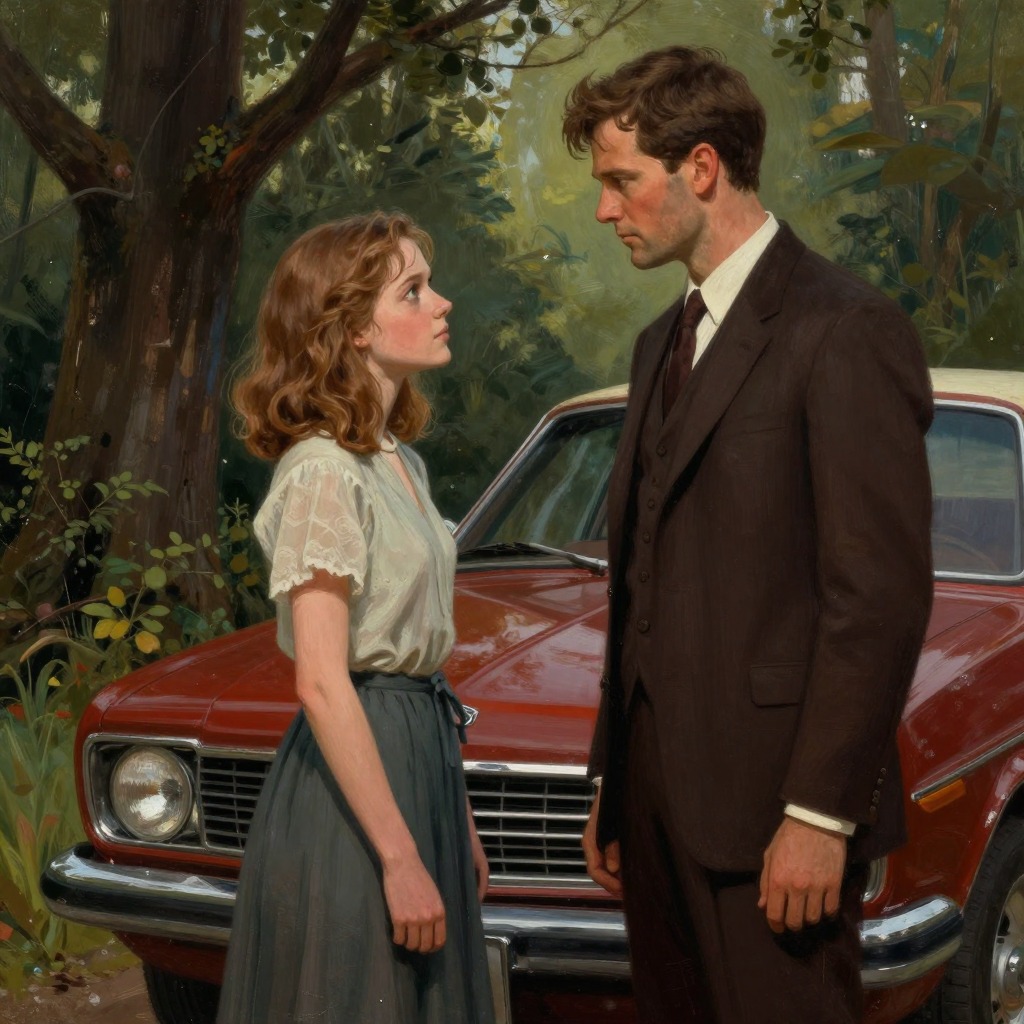
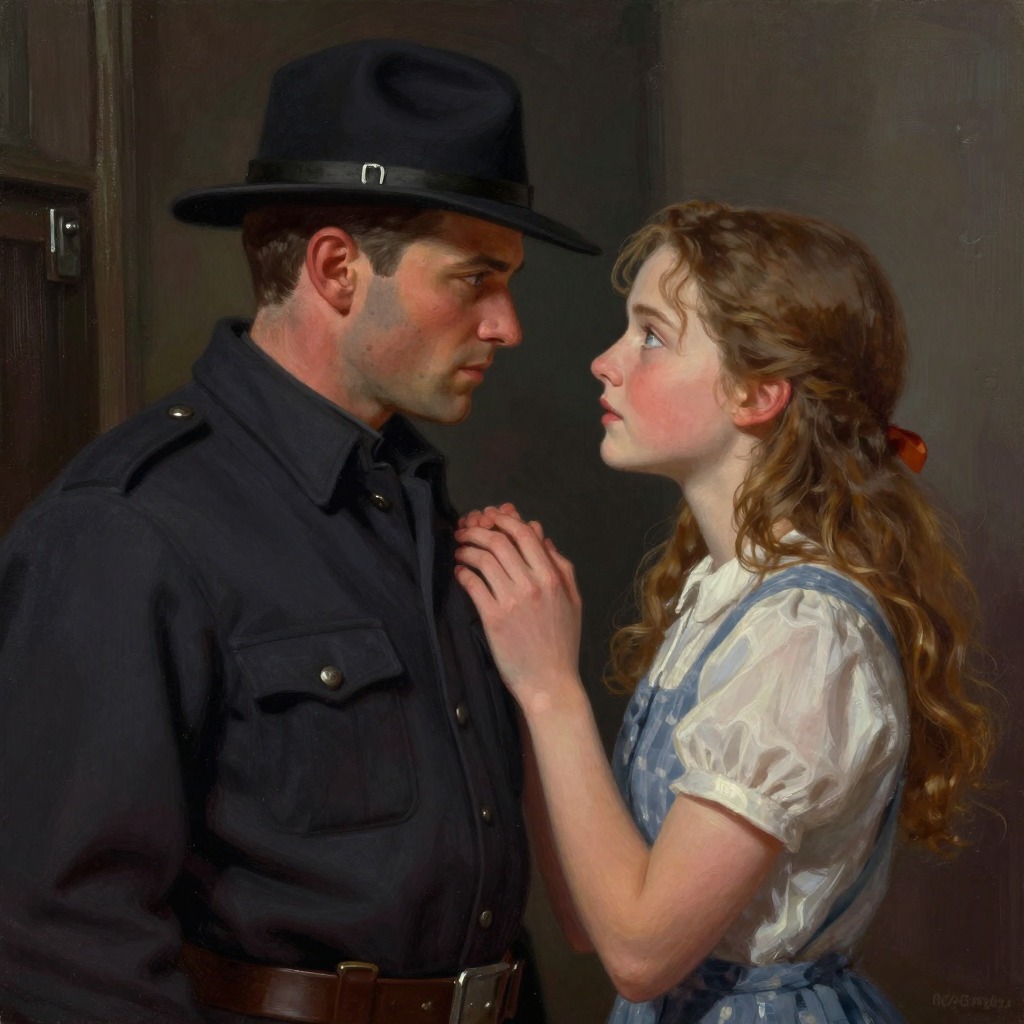
On a moonlit autumn night, as the leaves blew over the pavement, fireman Guy Montag turned a corner and encountered a girl who seemed to move with the wind and the leaves, her face slender and milk-white, her dark eyes fixed on the world with tireless curiosity. She was Clarisse McClellan, a seventeen-year-old neighbor, and her presence immediately unsettled him. She recognized him as a fireman not by his uniform but by the smell of kerosene, which she said she would have known with her eyes shut. Montag, accustomed to the awe or fear his profession inspired, found her calm scrutiny disorienting; he felt as if she were walking in a circle about him, turning him end for end, shaking him quietly, and emptying his pockets without once moving herself. She asked if it was true that firemen once put out fires instead of starting them, a notion he laughed off as nonsense, though her question lodged in his mind. When she asked if he ever read any of the books he burned, he recited the official slogan—"Monday burn Millay, Wednesday Whitman, Friday Faulkner, burn 'em to ashes, then burn the ashes"—but his laughter felt hollow. She told him she was seventeen and insane, that her uncle said the two always went together, and that she loved to walk at night, smell things, look at things, and watch the sun rise. She spoke of dew on the grass, of a man in the moon, of billboards stretched to two hundred feet because cars rushed by so fast, and of drivers who saw only green and pink blurs, never grass or flowers. Montag found himself irritable, then uncomfortable, then strangely moved. When they reached her house, all its lights were blazing—a rare sight—and she explained that her mother, father, and uncle were sitting around talking. Before she disappeared inside, she turned back and asked him, with wonder and curiosity, "Are you happy?" The question caught him off guard; he cried out "Am I what?" but she was already gone, running in the moonlight. He stood alone, and the question echoed in the silence of his own home.
The Unsettling of a Contented Man
Montag entered his bedroom to find his wife Mildred in bed, her Seashell ear radios tamped tight, staring vacantly at the ceiling. The room was like a cold marbled mausoleum, and he felt his smile—the fierce, burnt-in grin of a fireman—slide away, melt, and collapse. He recognized, for the first time, that he was not happy. He had worn his happiness like a mask, and the girl had run off with it. The encounter with Clarisse had cracked the surface of his life, and the crack widened as he remembered a similar meeting a year ago in the park with an old English professor who had been afraid of him. Now, lying in the dark, he felt the world had melted down and sprung up in a new and colorless form. The rain began to fall, and in his mind, the drops became names: Clarisse, Mildred, the uncle, the fire, sleeping tablets, disposable tissue, coat-tails, blow, wad, flush. He could not stop the cascade of images and questions. "I don't know anything any more," he said, and let a sleep-lozenge dissolve on his tongue.
The Mirror and the Candle
Clarisse's face, Montag realized, was like a mirror. It refracted his own light back to him, showing him his own innermost trembling thought. Most people were like torches, blazing away until they whiffed out, but she was different. She had an incredible power of identification, anticipating each flicker of his eyelid, each gesture of his hand, as if she were the eager watcher of a marionette show. He felt that if his eye itched, she might blink; if his jaws stretched imperceptibly, she would yawn long before he would. Her face was like the dial of a small clock seen faintly in a dark room, telling him the hour and the minute and the second with a white silence and a glowing, all certainty and knowing what it had to tell of the night passing swiftly on toward further darknesses but moving also toward a new sun. She was the first person in a good many years he had really liked, the first person he could remember who looked straight at him as if he counted. Her favorite subject was not herself, but everyone else, and him.
The Question That Changes Everything
The question "Are you happy?" became the fulcrum of Montag's transformation. He had never asked it of himself, and the answer—once he allowed himself to feel it—was a devastating no. The girl had run off across the lawn with the mask of his happiness, and there was no way to knock on her door and ask for it back. In the days that followed, he saw her everywhere: shaking a walnut tree, sitting on the lawn knitting a blue sweater, leaving bouquets of late flowers on his porch or a handful of chestnuts in a little sack. Every day she walked him to the corner, and he found himself telling her things he had never admitted. He felt old and fatherly, and when she asked why he had no daughters, he confessed that his wife had never wanted children. She told him about her psychiatrist, who called her a regular onion, and about her collection of butterflies. She said she liked to watch people, to figure out who they were and what they wanted and where they were going. She told him that people didn't talk about anything—they named cars and clothes and swimming pools and said how swell, but nobody said anything different from anyone else. She said she was afraid of children her own age because they killed each other, and that six of her friends had been shot in the last year alone. Montag listened, and the world he had taken for granted began to look strange and terrible. When she was gone—run over by a car, Mildred told him, four days ago—he felt the loss as a physical wound. He had not even known he was looking for her until the lawn was empty, the trees empty, the street empty. The routine of their brief acquaintance had been disturbed, and he was left with the unbearable knowledge that he had been blind, and that the only person who had shown him the truth was dead.
The Seed of Rebellion
The meeting with Clarisse was the first crack in Montag's armor, the first moment he allowed himself to doubt the world he served. Her questions about firemen, about books, about happiness, about the moon and the dew and the man in the moon, planted seeds that would grow into a full-blown rebellion. He began to see the emptiness of his marriage, the hollowness of his work, the lies of the society that had shaped him. He remembered the dandelion she had rubbed under his chin, which had shown that he was not in love with anyone. He had tried to conjure up a face to fit the words, but there was no face. The girl had seen through him, and her absence left a void that he would try to fill with books, with Faber, with the desperate act of murder, and finally with the hope of a new life among the book people. But it all began on that moonlit night, when a seventeen-year-old girl asked a fireman if he was happy, and he could not answer.